
• Price Trending B.F. Calculator Testimonials
  • 1-877-983-6367
Logo
  • Slabs
    • Discount Slabs
    • *Latest Live Edge Slab Kiln Drop
    • Large Live Edge Tabletop Slabs
    • River Table Slabs
    • Short Slabs and Rounds
    • Ambrosia Maple Slabs
    • Aromatic Red Cedar Slabs
    • Ash Slabs
    • Black Gum Slabs
    • Cherry Slabs
    • Curly Maple Slabs
    • Cypress Slabs
    • Elm Slabs
    • Hard Maple Slabs
    • Hickory Slabs Live Edge
    • Katalox Slabs
    • Kentucky Coffee Tree Slabs
    • Mango Slabs
    • Mappa Burl Slabs
    • Myrtlewood Slabs
    • Osage Orange Slabs
    • Padouk Slabs
    • Parota Slabs
    • Pecan Slabs
    • Poplar Slabs
    • Red Elm Slabs
    • Red Mulberry Slabs
    • Red Oak Slabs
    • Redwood Slabs and Burls
    • Sipo Mahogany Slabs
    • Soft Maple Slabs
    • Spalted Maple Slabs
    • Spalted Sycamore
    • Sycamore Slabs
    • Walnut Slabs
    • White Oak Slabs
    • White Pine Slabs
    • Tables, Tops, and Bases
  • Lumber
    • Exotic Lumber for Sale
    • African Mahogany Lumber
    • Afrormosia Lumber
    • Alder Lumber
    • Aniegre Lumber
    • Aromatic Cedar Lumber
    • Ash Lumber
    • Avodire Lumber
    • Beli Lumber
    • Bloodwood Lumber
    • Bocote Lumber
    • Bosse Lumber
    • Bubinga Lumber
    • Butternut Lumber
    • Canarywood Lumber
    • Caribbean Rosewood
    • Cherry Lumber
    • Chestnut Lumber
    • Cocobolo Lumber
    • Cumaru Lumber
    • East Indian Rosewood
    • Edinam Lumber
    • Granadillo Lumber
    • Guatemala Rosewood
    • Hard Maple Lumber
    • Hickory Lumber
    • Honduras Rosewood
    • Ipe Lumber
    • Iroko Lumber
    • Jatoba Lumber
    • Koa Lumber
    • Leopardwood Lumber
    • Limba Lumber
    • Macassar Ebony
    • Mahogany Lumber
    • Makore Lumber
    • Marblewood Lumber
    • Morado Lumber
    • Myrtlewood Lumber
    • Nogal Lumber
    • Obeche Lumber
    • Padouk Lumber
    • PC Maple Lumber
    • Purpleheart Lumber
    • Red Elm Lumber
    • Red Grandis Lumber
    • Red Oak Lumber
    • Redheart Lumber
    • Santos Mahogany Lumber
    • Sapele Lumber
    • Shedua Lumber
    • Sipo Lumber
    • Soft Maple Lumber
    • Spanish Cedar Lumber
    • Teak Lumber
    • Walnut Lumber
    • Wenge Lumber
    • White Oak Lumber
    • Rift White Oak Lumber
    • Yellow Birch Lumber
    • Yellowheart Lumber
    • Zebrawood Lumber
  • Mouldings-S4S
    • Dimension
      • African Mahogany Dimension
      • Alder, Knotty Dimension
      • Alder, Superior Dimension
      • Ash Dimension
      • Birch Dimension
      • Cherry Dimension
      • Douglas Fir Dimension
      • Hard Maple Dimension
      • Mahogany Dimension
      • Poplar Dimension
      • Red Grandis Dimension
      • Red Oak Dimension
      • Sapele, Flat Sawn Dimension
      • Sapele, Ribbon Dimension
      • Sipo Dimension
      • Soft Maple Dimension
      • Spanish Cedar Dimension
      • Teak Dimension
      • Walnut Dimension
      • Western Red Cedar Dimension
      • White Oak Dimension
      • White Oak, Quartersawn Dimension
    • Mouldings
      • Alder, Knotty Mouldings
      • Alder, Superior Mouldings
      • Cherry Mouldings
      • Maple Mouldings
      • Poplar Mouldings
      • Red Oak Mouldings
    • Knotty Alder Tongue & Groove
    • Box Beams
  • Reclaimed
    • Reclaimed Lumber
    • Reclaimed Solid Hardwood Beams
    • Reclaimed Wall Cladding
    • Reclaimed Flooring
  • Hot Deals
  • B.F. Calculator
  • Blog
  • Testimonials
  • Contact Us
  • Price Trending

The Art of the River Table — And Why Choose Wood Vendors

Author: Thomas PETROVSKI

The Art of the River Table — And Why Choose Wood Vendors

Posted on March 2, 2026 by Thomas PETROVSKI
The Art of the River Table — And Why Choose Wood Vendors

There’s a certain feeling you get watching water move — a stream flowing, a wave breaking, a waterfall spilling over stone. It’s calming and powerful at the same time — movement captured in a single moment.

That same feeling lives inside a beautiful wood slab.

Every slab carries its own natural rhythm through the grain, figure, and live edge — shaped by time and impossible to duplicate. No two are ever the same, and that organic movement is what gives each piece its depth and presence.

A river table brings these elements together effortlessly. The solid strength of wood meets the smooth clarity of resin, creating a striking balance between structure and flow. The grain tells the story of the tree’s growth, while the river preserves the stillness of water in motion. The result is a functional work of art where earth and water meet in perfect harmony.


At Wood Vendors, we curate custom live edge hardwood slabs specifically suited for high-end epoxy river tables — statement pieces designed to anchor dining rooms, executive offices, and architectural spaces.

Our river table slabs include both dramatic single slabs and carefully matched pairs cut from the same boule (log), allowing for stunning bookmatched symmetry and seamless grain flow across the table.

Each slab is:

  • Selected for bold grain and natural character
  • Kiln-dried for stability and performance
  • Reinspected for you every step of the way so you KNOW what you buy
  • Sized for statement dining and conference tables

Sized for statement dining rooms and commanding conference spaces, these are not commodity boards — they are the foundations of heirloom-quality furniture designed to anchor a room.

Before selecting your piece follow these steps or give us a call!

  1. Define Your Space
    Start by measuring your room. Consider length, width, and height, as well as how much space you want around the table for chairs and movement. A river table should feel balanced in the room — not crowded or undersized.
  2. Choose Your Wood Species
    Each species has its own character. Walnut offers rich, dark tones. Maple is lighter and more contemporary. Oak brings bold grain and texture. Think about how the wood will complement your flooring, cabinetry, and overall style.
  3. Select the Slab
    No two slabs are alike. Look at the grain pattern, figure, live edge shape, and overall movement. This is where the personality of the table lives. Choose a slab that speaks to you.
  4. Pick Your River Style
    Decide on resin color and transparency. Do you want a crystal-clear river, a deep ocean blue, or a subtle smoky tone? The resin should enhance the wood, not overpower it. 
  5. Consider the Base
    The base affects both style and stability. Steel bases offer a modern, industrial look. Wood bases create a more traditional feel. Make sure the base supports the size and weight of the slab.
  6. Review Timeline & Delivery
    Custom river tables take time. Confirm production timelines, delivery options, and installation details before placing your order.

Designers, builders, and discerning homeowners choose Wood Vendors when the project demands presence.

When the design calls for impact, it begins with exceptional wood.

👉 Explore our curated river table slab inventory:

https://woodvendors.com/river-table-slabs/

Exceptional tables start here.


Posted in UncategorizedLeave a Comment on The Art of the River Table — And Why Choose Wood Vendors

Not All Customers Are Equal: When It’s Time to Fire One – By Pat

Posted on February 25, 2026 by Thomas PETROVSKI
Not All Customers Are Equal: When It’s Time to Fire One – By Pat

Thirty years in sales teaches you a few things.

Here’s one of them:

Every sale is not a good sale.

Some customers grow your business.
Some customers grow your stress.

The wrong customers take more time, ask for more concessions, create more noise—and deliver less profit. They’re in a rush but light on details. “Just quote it.” Then they question the quote. They compare you to every supplier they’ve ever worked with. (None of them were good enough either.)

They pay slow.
They complain fast.
They negotiate after the fact.

And somehow, it’s always your fault.

Here’s the mistake: thinking revenue equals value.

It doesn’t.

If a customer consumes your margin, your energy, and your focus, they’re not a customer. They’re a liability.

The best customers are different.
They’re clear.
They’re fair.
They respect the partnership.
They understand that business works best when both sides win.

You don’t build a strong company by keeping everyone.

You build it by choosing who you serve.

Sometimes the most profitable decision you’ll make is letting the wrong customer go.

Posted in UncategorizedLeave a Comment on Not All Customers Are Equal: When It’s Time to Fire One – By Pat

The Language of Love in Wood: 5 Trees with Romantic Folklore

Posted on February 13, 2026 by Thomas PETROVSKI
The Language of Love in Wood: 5 Trees with Romantic Folklore

Valentine’s Day is filled with roses, poetry, and promises — but long before greeting cards existed, trees carried the symbolism of love.

Across cultures and centuries, certain wood species have been tied to romance, devotion, courtship, and marriage. Grain patterns, color tones, longevity, and even the way a tree grows have inspired stories about passion and partnership.

This Valentine’s Day, we’re exploring five hardwoods with deep-rooted folklore — woods that don’t just look beautiful, but tell a love story.

🌹 Rosewood — The Wood of Passion

Few woods feel as romantic as Rosewood.

With its deep reddish-brown tones, dramatic dark streaks, and subtle fragrance when worked, Rosewood has long been associated with warmth and sensuality. While the connection may begin with its name — the rose being a centuries-old symbol of love — the symbolism runs deeper.

Historically, Rosewood has been used to craft intimate, meaningful objects:

  • Fine jewelry boxes
  • Writing desks for love letters
  • Musical instruments that carried romantic melodies
  • Heirloom furniture meant to last generations

Symbolically, Rosewood represents deep passion and emotional intensity — the kind of love that lingers long after the moment passes.

Perfect for: Keepsake boxes, jewelry storage, heirloom gifts, and statement accent pieces.

🌿 Oak & Ivy — Strength and Devotion

In European folklore, Oak and Ivy together symbolized marriage.

Oak represents strength, protection, and stability. It stands tall, weathers storms, and endures for centuries. Ivy, which clings and climbs, represents loyalty and devotion.

When ivy wraps around oak, it becomes a living symbol of enduring partnership — two lives intertwined, each supporting the other.

This pairing reminds us that lasting love isn’t just passion — it’s resilience, commitment, and shared strength.

From a woodworking perspective, Oak’s bold grain and exceptional durability make it ideal for projects meant to stand the test of time — much like the symbolism it carries.

Perfect for: Wedding gifts, carved panels, symbolic inlays, and custom furniture built to last.

🌳 Linden/Basswood — The Tree of Lovers

Throughout Germanic and Slavic villages, Linden/Basswood trees were planted in town centers as gathering places. Couples would meet, court, and celebrate beneath their branches.

In Norse tradition, Linden is associated with Freya, the goddess of love and beauty. Over time, it became known as the “Lovers’ Tree” — a symbol of harmony, gentle affection, and shared joy.

Linden (also known as Basswood in North America) is prized by carvers for its smooth texture and ease of shaping. It’s ideal for detailed artwork and heartfelt carvings — initials, meaningful dates, or symbolic designs.

Perfect for: Hand-carved art, romantic relief carvings, and personalized keepsakes.

🌸 Cherry — The Beauty of Love That Deepens

Cherry trees — especially their blossoms — have long symbolized romance and the fragile beauty of life.

In Japan, cherry blossom season is a time of reflection and connection. The blossoms bloom brilliantly — and briefly — reminding us to cherish each moment.

Cherry wood itself feels inherently romantic. Freshly milled, it carries soft pink undertones. Over time, it deepens into a rich, warm reddish-brown — growing more beautiful with age.

If Rosewood symbolizes passion, Cherry symbolizes love that matures, strengthens, and deepens over time.

Perfect for: Jewelry boxes, engraved gifts, elegant home accents, and live edge slabs for statement pieces.

🌿 Myrtle — A Sacred Symbol of Marriage

In ancient Greece and Rome, Myrtle was sacred to Aphrodite (Venus), the goddess of love.

Brides wore myrtle wreaths as symbols of fidelity and everlasting devotion — a tradition that carried into European royal weddings for centuries. Myrtle came to represent sacred union, faithfulness, and lifelong commitment.

Though not as commonly used in large-scale lumber applications as Oak or Cherry, Myrtle’s fine texture and warm tone make it especially suited for meaningful small-scale projects and heirloom pieces.

Perfect for: Wedding heirlooms, romantic tokens, ceremonial pieces, and symbolic inlays.

Crafting with Meaning This Valentine’s Day

Flowers fade. Chocolate disappears. But wood endures.

Choosing a species with romantic symbolism adds depth to any gift — whether it’s a handcrafted keepsake, a custom slab dining table, or a meaningful heirloom in the making.

This Valentine’s Day, consider telling a story through the material itself:

  • 🌸 Cherry for new love that deepens
  • 🌳 Linden/Basswod for courtship and harmony
  • 🌹 Rosewood for passion
  • 🌿 Oak & Ivy for enduring strength
  • 🌿 Myrtle for lifelong devotion

At WoodVendors.com, we believe the right hardwood doesn’t just support your project — it enhances the story behind it.

Because the most meaningful gifts aren’t just given.
They’re crafted

Posted in UncategorizedLeave a Comment on The Language of Love in Wood: 5 Trees with Romantic Folklore

Beauty Marks or Hardwood Defects? Part 1) Hidden Metal in Slabs

Posted on February 6, 2026 by Thomas PETROVSKI
Beauty Marks or Hardwood Defects? Part 1) Hidden Metal in Slabs

Part 1) Hidden Metal in Slabs: Walnut, White Oak, and the Stories They Carry 

Live edge slabs are prized for their natural beauty, but some of the most interesting — and challenging — slabs carry a hidden past. Walnut slabs, white oak slabs, and several other hardwood species are well known for containing metal buried deep inside the wood. Nails, wire, spikes, and other remnants often reveal themselves only when milling begins.

These encounters can lead to burn marks, metal staining, and oxidation, but they also tell a story. Understanding why metal shows up, how it affects different species, and how to work with it can turn a surprise into a design feature.

Why Metal Is So Common in Certain Wood Species

Trees don’t grow in isolation. Many of the most valuable hardwoods spent decades — or centuries — growing around people.

Metal commonly ends up in trees due to:

  • Fence lines and pasture boundaries
  • Barns, sheds, and old farm structures
  • Tree stands, signage, and property markers
  • Forgotten nails, wire, and hardware

As the tree grows, it slowly engulfs the metal, sealing it inside the trunk. By the time the log is milled, there’s often no visible sign of what’s hidden beneath the surface.

Walnut Slabs: Beauty with a Reputation

Walnut slabs are some of the most metal-prone slabs mills encounter.

An old wives’ tale about walnut trees

For generations, people believed that driving nails into walnut trees would make them produce more nuts. The idea was that stressing the tree would increase yield. While there’s no scientific proof this works, the practice was common enough that millworkers still see the results today.

That folklore is one reason walnut logs frequently surprise sawyers — and why walnut slab milling is often approached with extra caution.

👉 [Available Walnut slabs for sale]

White Oak Slabs: Even More Likely to Contain Metal

White oak is often considered the most metal-heavy species processed by sawmills.

Why white oak is notorious

  • Commonly grows along fence rows and property lines
  • Frequently found in agricultural settings
  • Extremely long-lived
  • Very high tannin content

White oak slabs often reveal:

  • Deep black iron stains
  • Rust bleed from oxidizing metal
  • Burn marks during milling due to density

Once stained or burned, white oak can be more difficult to clean up than many other species — but it’s also what gives white oak slabs their unmistakable character.

👉 [Available White Oak slabs for sale]

Other Species That Commonly Contain Metal

While walnut and white oak lead the list, several other species frequently hide metal:

  • Red Oak: Similar tannin reactions, common in farm environments
  • Maple: Yard trees often used for hanging signs or swings
  • Ash: Fence rows and windbreaks hide wire and staples
  • Elm: Old urban and farm trees with forgotten hardware

Any tree that grew near people long enough likely carries some history inside it.

👉 [Red oak, Maple, Ash, Elm slabs.]

Burn Marks: When Metal Meets the Blade

Burn marks occur when a saw blade contacts metal and generates intense heat.

What causes burn marks

  • Blade rubbing metal instead of cutting wood
  • Dull blades increasing friction
  • Dense woods holding heat longer

What they look like

  • Dark brown or black streaks
  • Parallel lines along the cut
  • Discoloration that may go deeper than surface sanding

Even after metal is removed, burn marks can remain because the heat alters the wood fibers.

Metal Staining: A Chemical Reaction, Not Dirt

Metal staining isn’t residue — it’s chemistry.

  • Iron reacts with tannins in walnut and oak
  • Creates permanent dark discoloration
  • Often follows the grain or radiates from metal locations

This is why sanding alone doesn’t always remove metal stains.

👉 [Finished walnut table with stain]

Oxidation: Rust That Keeps Working

When metal remains in a slab, oxidation (rusting) can continue over time.

Effects of oxidation

  • Rust bleeding into surrounding wood
  • Orange or brown halo stains
  • Finish adhesion issues
  • Potential weakening around the metal

Moisture accelerates oxidation, making proper drying and sealing critical.

Tips & Tricks for Working with Metal-Affected Slabs

Detecting metal early

  • Use magnetic metal detectors
  • Look for bumps or distorted grain
  • Start with slow, shallow milling passes

Dealing with burn marks

  • Aggressive sanding (80–120 grit)
  • Light planer passes
  • Blend discoloration naturally into the grain

Treating metal stains

  • Oxalic acid for iron-tannin reactions
  • Wood bleaching when appropriate
  • Dark finishes or epoxy accents to incorporate stains

Preventing further oxidation

  • Remove exposed metal when possible
  • Clean rust residue thoroughly
  • Seal slabs promptly after surfacing

Flaw or Feature? That’s Your Call

Some woodworkers try to eliminate every trace of metal interaction. Others embrace it. In live edge tables, countertops, and statement furniture, metal staining and burn marks often become conversation pieces — proof of the tree’s long, working life.

👉 [Slabs for sale with Beauty enhancers!]

Final Thoughts

Walnut slabs, white oak slabs, and many other hardwoods carry more than grain — they carry history. Old farming practices, folklore, and decades of human use are often sealed inside the wood.

At WoodVendors, we believe understanding your material leads to better projects. Knowing why metal is there and how it affects the wood lets you decide whether to remove it, manage it, or celebrate it.

👉 Explore available slabs, see finished projects, and follow along behind the scenes:

  • [Main slab inventory]
  • [Contact us]
  • [Custom designs]
  • [Instagram / social media]
Posted in UncategorizedLeave a Comment on Beauty Marks or Hardwood Defects? Part 1) Hidden Metal in Slabs

JUST IN: Rare 8/4 Zebrawood Available February 23rd at Wood Vendors

Posted on January 23, 2026January 24, 2026 by Thomas PETROVSKI
JUST IN: Rare 8/4 Zebrawood Available February 23rd at Wood Vendors

Wood Vendors is excited to announce a fresh arrival of 8/4 Zebrawood lumber, officially ready for purchase starting February 23rd. At a time when Zebrawood is nearly impossible to source, we’ve secured true Zebrawood — not Red Zebrawood, which is currently far more common in the market.  Accepting pre-orders, projected ready date late February 2026, we expect this to sell out fast so order soon!

If you’ve been waiting for authentic Zebrawood, this is a rare opportunity.

🌿 What Makes Zebrawood Truly Unique

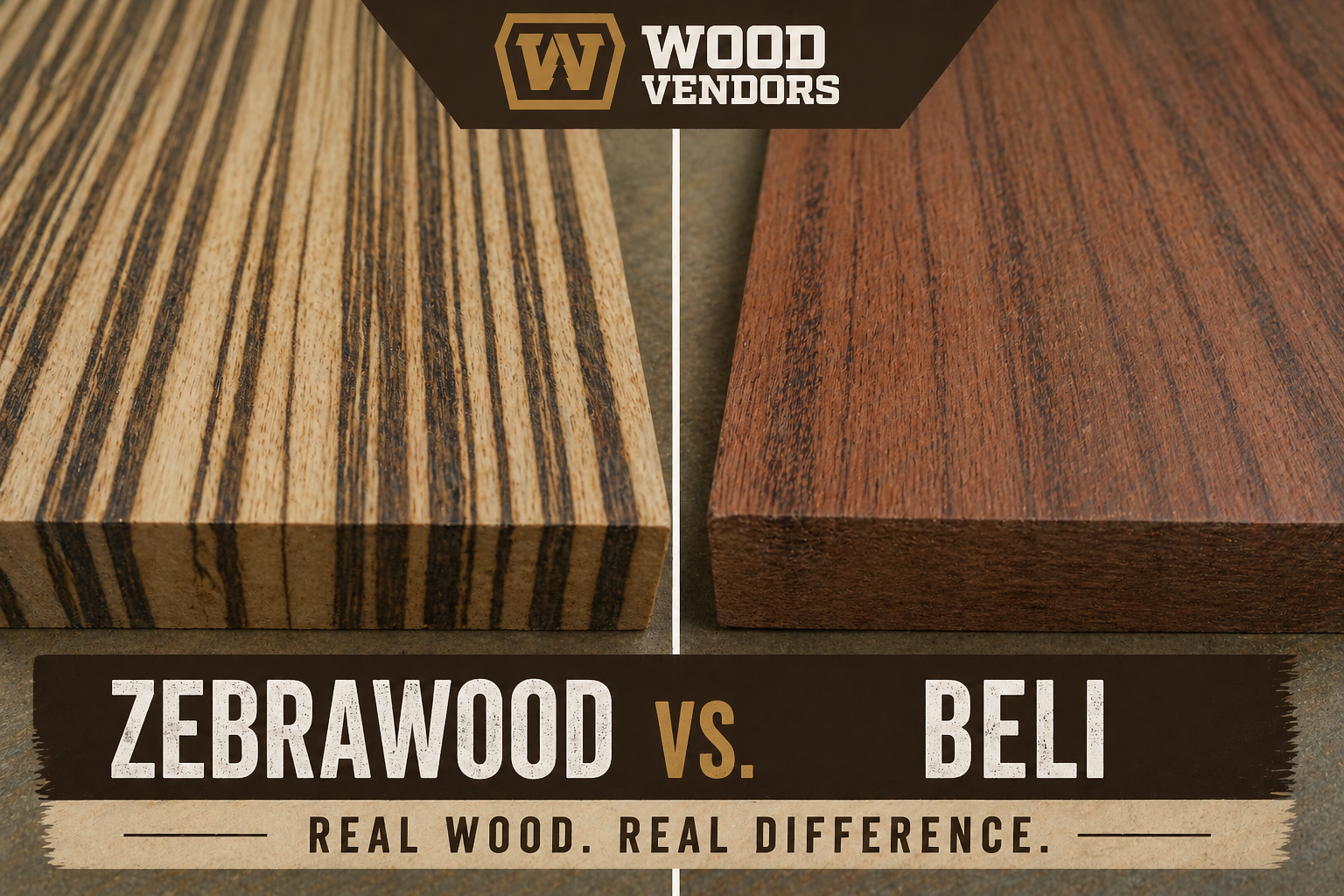
Zebrawood is one of the most instantly recognizable exotic hardwoods in the world. Its name comes from its high-contrast striped grain, featuring a pale golden to cream base layered with bold, dark brown to nearly black streaks. Each board is visually distinct — no two pieces are alike, making it ideal for statement projects.

Zebrawood is typically cut quarter sawn to best expose its dramatic linear striping. This cut enhances both the visual impact and the dimensional stability of the lumber, making it a preferred choice for fine woodworking and architectural applications.

➡️ Looking for other bold, striped hardwoods?
You may also want to explore Wenge lumber, Ziricote, or Macassar Ebony — all of which offer dramatic grain patterns with different tones and textures.

🧠 Interesting Facts About Zebrawood

  • Native to West Africa
    Zebrawood primarily comes from regions such as Cameroon and Gabon, contributing to its limited availability.
  • Botanical name: Microberlinia brazzavillensis
    A slow-growing hardwood that develops strong contrast and density over time.
  • Naturally dramatic — no stain required
    Clear or oil finishes are typically used to highlight Zebrawood’s natural striping.
  • Ideal for bookmatching
    Zebrawood is frequently resawn and bookmatched to create symmetrical, mirror-image grain patterns.

➡️ If Zebrawood sells out:
Consider alternatives like Beli, Tigerwood, or Bocote, which offer similar movement and visual interest.

  • Harder than many domestic hardwoods
    Zebrawood is denser than walnut or cherry, making it suitable for both decorative and functional uses.
  • Rare in thicker stock
    Most Zebrawood on the market is thin or veneer-grade. 8/4 material is especially uncommon.

➡️ Need thick stock for resawing?
Check out 8/4 Walnut, 8/4 Sapele, or 8/4 White Oak as excellent substitutes for custom milling and bookmatched panels.

🪚 Custom Resaw Services Available

To help you get the most from this rare material, Wood Vendors offers resaw services on this Zebrawood.

We can resaw to:

  • Custom thicknesses
  • Bookmatched panels
  • Thin stock for specialty woodworking or design applications

🔥 Hot Deal — Limited Quantity

We’re offering this 8/4 Zebrawood as a hot deal at a special sale price. Quantities are limited, and once it’s gone, restocks are uncertain.

📅 Available for purchase starting February 23rd
🪵 True Zebrawood (not Red Zebrawood)
🪚 Resaw services available

➡️ Miss this drop?
Explore our current inventory of exotic lumber specials for other limited-quantity materials.

📸 See It Before It’s Gone

Follow @wood.vendors on Instagram for in-yard photos, grain close-ups, and release-day updates. You can also browse similar materials anytime on WoodVendors.com.

Posted in UncategorizedLeave a Comment on JUST IN: Rare 8/4 Zebrawood Available February 23rd at Wood Vendors

Hardwoods in Transition: How the Market Shifted from 2025 to 2026

Posted on January 8, 2026January 8, 2026 by Thomas PETROVSKI
Hardwoods in Transition: How the Market Shifted from 2025 to 2026

Trends in hardwood lumber, live edge slabs, and reclaimed wood — insights for the modern craftsman.

2025 marked a turning point for the hardwood industry. Supply constraints stabilized, buyer expectations rose, and premium materials—from wide White Oak boards to statement live edge slabs—became the focus. As we move into 2026, the hardwood market isn’t just recovering; it’s redefining value.

From dimensional lumber to slabs and reclaimed wood, shifting demand, sourcing realities, and a deeper appreciation for story-rich materials are shaping how buyers plan and build. Here’s what matters most heading into the year ahead.

Hardwood Lumber: Elevated Expectations

Hardwood lumber markets in 2025 were defined less by volatility and more by selectivity. Buyers became increasingly intentional about species choice, cut, and overall quality.

Broader Interest Across Species

Both domestic and exotic species continued gaining traction—from Rift and Quartered White Oak, prized for stability and consistency, to long-standing favorites like Walnut and Hard Maple. Species selection is no longer just aesthetic; performance, movement, and longevity matter more than ever.

A More Educated Buyer

Today’s customers research wood characteristics before buying. They compare grain structure, hardness, finishing behavior, and long-term durability. Educational resources and species guides play a key role in helping builders and designers make informed decisions that align with their project goals.

Looking into 2026, buyers are focusing less on short-term price swings and more on lumber that delivers lasting value—especially for architectural millwork, custom furniture, and high-end interiors.

Slabs: From Raw Material to Design Centerpiece

Live edge slabs continued to gain momentum throughout 2025, solidifying their place as a core material—not a trend.

Strong Demand for Character Pieces

Designers and builders increasingly choose slabs for statement applications: dining tables, conference tables, mantels, and commercial installations. The appeal lies in individuality—each slab tells a story that no manufactured product can replicate.

Greater Variety and Accessibility

Compared to years past, slab inventories have broadened significantly. Buyers now expect access to a wide range of species including Walnut, Maple, Oak, Red Elm, Cypress, and rarer finds like Kentucky Coffee Tree which is bioluminescent and glows under a black light!  Slab buyers today are often seeking lengths exceeding 20 feet long. Kiln drying expertise, detailed photography, and transparent grading have become standard expectations.

Growing Buyer Confidence

Improved drying processes and thorough inspection practices give customers confidence—especially those purchasing remotely or for trade projects—that the slab they select online will meet expectations upon delivery.

Looking ahead: In 2026, slabs continue to function as design elements rather than raw stock. Their visual impact and authenticity make them central to modern residential, hospitality, and commercial spaces. 

*****Tom’s Pro-tip: 

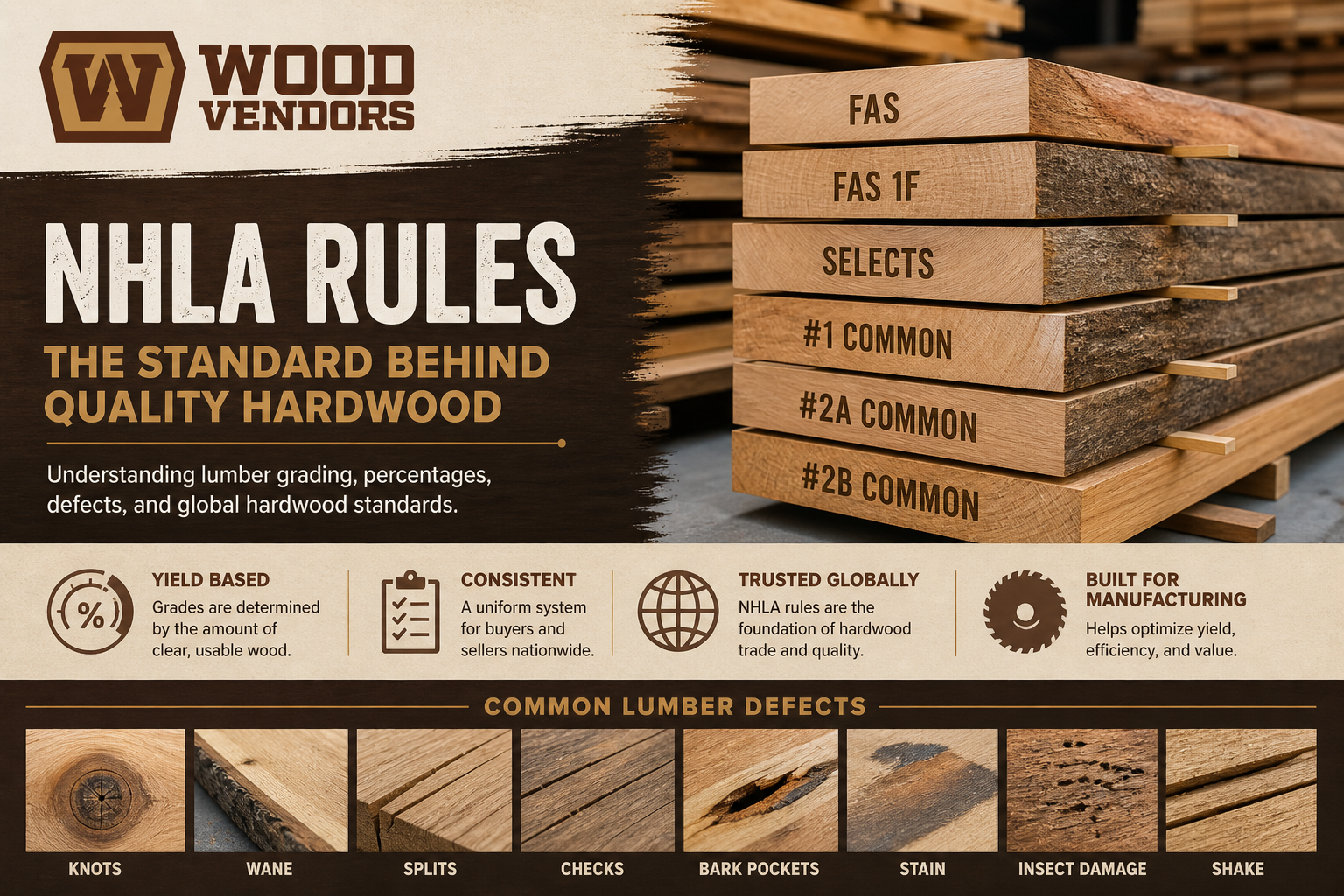
Only Buy Slabs from Trusted Sources: A lot of small slabbers have vanished, and one big reason is simple: there are no grades in kiln‑dried slabs. Unlike NHLA‑graded lumber, slabs are the Wild West — you either know what you’re doing, or you don’t.

At Wood Vendors, we do. We dry it right, we sort it right, and we stand behind every piece. When you buy from us, you’re not gambling on someone’s backyard experiment — you’re getting proven, professional quality every time.******


Reclaimed Wood: Sustainability with a Story

Reclaimed wood maintained strong momentum in 2025 and continues to grow in relevance.

Character That Can’t Be Replicated

Recovered from historic barns, factories, and industrial buildings, reclaimed hardwood offers grain patterns, patina, and density unavailable in newly harvested material. These visual and tactile qualities add depth and authenticity to modern designs.

Performance Meets Sustainability

Beyond aesthetics, reclaimed wood supports responsible sourcing by extending the lifecycle of existing material. This aligns with the growing emphasis on sustainability across architecture, construction, and interior design.

Expanding Applications

Reclaimed wood is now commonly specified for flooring, wall cladding, beams, mantels, and custom furniture—serving both decorative and structural roles.

In 2026, reclaimed wood is no longer niche. It’s a mainstream material in luxury, rustic-modern, and contemporary projects alike.

What’s Hot in 2026 — and What’s Cooling Off

Not all materials are moving at the same pace. As the market matures, clear winners—and slower segments—are emerging.

🔥 Hot in 2026

Live Edge Slabs with Strong Figure

  • Wider slabs (30”+)
  • Bold grain, natural movement, and dramatic edges
  • Most sought-after species: Black Walnut, Big Leaf & Curly Maple, Elm

Slabs are now treated as centerpiece materials rather than supporting components.

Reclaimed Hardwood

  • Especially reclaimed Oak, Elm, and old-growth Fir
  • Popular for accent walls, beams, flooring, and furniture

Sustainability and narrative continue driving demand.

Exotic Hardwoods for Specialty Use

  • Ipe and Goncalo Alves (Tigerwood) remain strong for outdoor and specialty projects
  • Durability and performance justify premium pricing

Wide, Premium Domestic Lumber

  • Thick and wide White Oak and Walnut
  • Favored by furniture makers and millwork shops seeking visual continuity and fewer glue-ups

❄️ Cooling or Slower Segments

Commodity Dimensional Lumber

  • Standard 4/4 and 6/4 material for general construction
  • Builders increasingly turn to engineered or alternative materials for cost control

Secondary Domestic Species

  • Poplar and Soft Maple remain useful but see slower demand
  • Buyers prioritize species with stronger visual appeal and resale value

Lower-Grade Slabs

  • Slabs with heavy checking, excessive defects, or movement
  • Buyers prefer to pay more for better-dried, higher-quality material

Pricing Trends: Stabilized but Elevated

After extreme volatility from 2021–2023, pricing settled in 2025—but at levels well above pre-2020 norms.

Key Shift from 2025 to 2026

  • Prices stabilized but did not return to historical lows
  • Gradual upward pressure continues due to labor, drying, energy, and freight costs
  • Premium materials show stronger price resilience than commodity stock

Alder Lumber

  • Long a budget-friendly hardwood
  • 2025 pricing stabilized around $2.30–$7.30 per board foot
  • 2026 shows mild increases tied to production costs, not demand spikes

White Oak

  • Lumber commonly $5.75–$9.35 per board foot
  • Slabs ranging from $750 to $3,250+, with wide, premium pieces commanding top value
  • Pricing increasingly reflects quality and visual impact rather than availability alone

Ipe and Exotic Hardwoods

  • Often $15–$30+ per board foot
  • Pricing remains firm due to import logistics and global supply factors

Slabs

  • Smaller slabs under $600 remain available
  • Premium slabs continue strengthening at the high end
  • The more unique the slab, the less price-sensitive buyers become

-Tariffs and Trade: A Growing Influence on the Hardwood Market

Between 2025 and 2026, Cites regulations, tariffs and international trade pressures continued to influence hardwood availability and pricing—particularly for imported and cross-border species. While tariff rates themselves remained relatively stable, higher freight costs, added compliance requirements, and reduced overseas supply increased the true landed cost of certain wood products.

One clear example of tariffs affecting pricing and availability is Western Red Cedar, which is primarily sourced from British Columbia. Because it crosses international borders before reaching U.S. buyers, its pricing is more directly impacted by tariffs, duties, and transportation costs than many domestic hardwoods. As a result, Western Red Cedar pricing remained more volatile than comparable U.S.-sourced species during this period.

Cites regulations are affecting species such as Cumaru and Afrormosia.  These regulations drastically limit the supply of listed hardwoods that can be harvested and imported into the U.S. market.

Overall, these pressures encouraged both suppliers and buyers to plan further ahead, remain flexible in species selection, and place greater emphasis on domestically sourced and reclaimed materials. A deeper look at tariffs and trade impacts will be covered in an upcoming, dedicated blog.

******Pat’s Pro-Tip:

Tariffs are not having a direct effect on current hardwood availability as much as other market factors such as Cites regulations.  Give the experts at Wood Vendors a call to discuss viable substitutes for your hard to source hardwood needs.*******

How Buyer Behavior Has Evolved

Across all categories, three clear patterns define today’s hardwood buyer:

Informed and Intentional

Customers research species performance, movement, and finishing behavior before purchasing.

Planning Ahead

Longer lead times and premium inventory encourage early material selection—often months before a project begins.

Story and Authenticity Matter

From reclaimed beams to live edge slabs, buyers value meaning, origin, and individuality—not just board-foot cost.

What This Means for Customers

To navigate the current market effectively:

  • Explore species resources to match material to application
  • Treat slabs as focal elements, not raw stock
  • Consider reclaimed wood early for sustainability and design impact
  • Work with knowledgeable suppliers to align material choice with project goals

Final Thought

Hardwoods are more than building materials—they are living stories shaped by time, craft, and design. As 2026 unfolds, the market reflects a deeper respect for quality, sustainability, and authenticity.

Let us know which trends excite you most—and how we can help you find the right wood for your next project.

LOGO1 NARROW

1 (877)983-6367

Posted in UncategorizedLeave a Comment on Hardwoods in Transition: How the Market Shifted from 2025 to 2026

Why Buy Rift White Oak from Wood Vendors?

Posted on December 9, 2025January 9, 2026 by Thomas PETROVSKI
Why Buy Rift White Oak from Wood Vendors?

At Wood Vendors, we don’t just sell Rift White Oak — We Produce it from the log into high quality kiln dried lumber.  For the past year, we’ve been sawing our own Indiana rift white oak and supplying it green to high-end builders and manufacturers. Thanks to demand from repeat customers, we partnered with a trusted commercial kiln to offer this material kiln-dried, S2S to 15/16” and ready for prompt shipment to your shop!

What makes our Rift White Oak program different is simple:
consistent supply, exceptional widths, transparent grading, consistent color, and honest, layer-by-layer unit photography.

All material is NLHA graded, cut from premium Indiana white oak logs, and already being used in luxury residential millwork, furniture, and commercial architectural packages nationwide.


What Sets Our Rift White Oak Apart

Reliable, Ongoing Production

We have the capacity to produce Rift White Oak consistently — whether you need a 200–500 BF unit or a full truckload. We can keep your shop supplied month after month.

Wide Widths Few Suppliers Can Match

Because we control the sawing, we can deliver impressive widths:

  • Average widths: 6–7″

  • Large boards: 10–12″

  • Oversized lamella stock: 11″+ 

  • Our largest board to date: 13″ x 16′ — fully rift grain  

These widths are exceptionally rare in the rift-cut market.

Multiple Grade Options & Cost Efficiency

Available as:

  • Select & Better Grade

  • Mixed loads (Select+, #1 Common, Rustic)

Even the lower grades yield beautiful, straight-grain lumber in wide widths — and purchasing mixed loads allows us to utilize the entire log and offer cost savings.

Full Transparency: Every Unit Photographed

We photograph each unit layer by layer, so you know exactly what you’re buying before it ships.
Ask us for our Google link to view current units available.

Premium Indiana White Oak

Our logs come exclusively from Indiana, known for producing exceptionally straight, tight-grained white oak. The result is a consistently clean rift appearance with consistent color throughout our lumber.

Veteran-Owned. Customer-First. National Shipping

We stand behind our service and our lumber:

  • Veteran-owned business

  • Honest, accurate grading

  • National shipping with careful packaging

  • Ability to meet custom width, grade, and volume requirements


What Is Rift White Oak?

Rift White Oak is created by sawing the log at a precise angle to the growth rings (about 30–60 degrees), producing the vertical, even grain pattern prized in today’s modern interiors. Compared to other cuts:

  • Flat-sawn shows cathedral grain.

  • Quarter-sawn shows ray fleck.

  • Rift-sawn Offers a clean, consistent look due to the vertical grain pattern.

This subtle grain pattern is ideal for architects, cabinetmakers, and designers seeking a refined, minimalist aesthetic as well as a very hard and stable hardwood.


A Short History of Rift-Cut Lumber

Traditional Craftsmanship

Rift-sawn oak has roots in early European and American fine furniture making, where craftsmen valued its stability and uniform appearance. White oak — naturally strong and moisture resistant — was the perfect species for this precision cut.

Industrial Precision

By the late 1800s and early 20th century, rift- and quarter-sawn oak became staples in Mission, Arts & Crafts, and Shaker furniture because of their straight grain and stability.

Modern Popularity

Today, rift white oak is one of the most specified hardwoods in:

  • Scandinavian and Japanese-inspired design

  • Modern commercial interiors

  • High-end residential cabinetry, millwork, and flooring

Its clean look pairs effortlessly with stone, metal, and matte finishes — but its availability, especially in wide widths, is limited.

This is where Wood Vendors Rift White Oak leaves the competition in the dust!

Why Wider Rift White Oak Matters

  • Fewer seams → cleaner, architectural surfaces

  • More efficient layout and yield

  • Improved stability on large panels or doors

  • Premium appearance for high-end applications

  • Easy to hide glue joints

Our ability to consistently produce 6–11″+ widths gives builders and designers options they simply can’t find elsewhere.


Ready to Order?

Chose the units that will work best for your project or get a full truck now!

Speak to the rift white oak specialists at Wood Vendors to:

👉 Request current inventory

👉 Ask for unit photos
👉 Get a quote for Select+, mixed grades, or custom production

Posted in UncategorizedLeave a Comment on Why Buy Rift White Oak from Wood Vendors?

The Mahogany Family Face-Off: Mahogany Wood Comparison of Sapele, African Mahogany, Sipo, and Genuine Mahogany

Posted on November 7, 2025December 11, 2025 by Thomas PETROVSKI
The Mahogany Family Face-Off: Mahogany Wood Comparison of Sapele, African Mahogany, Sipo, and Genuine Mahogany
Mahogany Wood Comparison is one of the most searched topics among woodworkers. At Wood Vendors, we often get questions like:

“Which mahogany should I use for my next build?”
“Is Sapele better than genuine mahogany for cabinets?”

“What is the difference between the different types of Mahogany?”

In this deep dive, we’ll compare Sapele, African Mahogany, Sipo (Utile), and Genuine Mahogany (Swietenia spp.) — exploring their histories, strengths, drawbacks, ideal uses, and current pricing.
The goal: help you choose wisely (and confidently) for your next project.


Introduction: Why All the Confusion?

“Mahogany” is a broad term — not all woods called mahogany are botanically or materially the same. Over centuries of trade and regulation, several tropical species became accepted substitutes for the original American mahogany.

At Wood Vendors, we stock the best of these, and this guide explains how each compares.


A Quick Glossary

Common Name Botanical / Trade Name(s) Region / Origin Notes
Genuine Mahogany Swietenia macrophylla, S. mahagoni, etc. Central / South America The classic standard; regulated under CITES
African Mahogany Khaya spp. (e.g. Khaya ivorensis) West / Central Africa Commonly marketed as “African Mahogany / Khaya”
Sapele Entandrophragma cylindricum Central / West Africa
Very consistent color
Sipo / Utile Entandrophragma utile Central / West Africa Closest visual match to genuine mahogany

Genuine Mahogany — The Classic Standard

History & Background

Genuine mahogany (Swietenia macrophylla) is the benchmark for luxury woodworking — prized for furniture, musical instruments, and boat interiors. Heavy colonial-era harvesting led to scarcity and CITES regulation (Appendix II), but responsibly sourced stock remains available.

Properties, Pros & Cons

Pros

  • Beautiful warm color straight from the tree
  • Excellent workability — planes, carves, and finishes easily
  • Great dimensional stability and resistance to warping
  • High prestige — the wood of fine furniture for centuries

Cons

  • Highest cost due to rarity and regulation
  • Limited legal harvest quotas and longer lead times
  • Color variability between lots
  • Requires CITES compliance for import/export
  • Limited lengths and thicknesses available

💲 Current Pricing (October 2025)

  • 4/4 Genuine Mahogany: ~ $14.75 /BF @ 100–249 BF
  • Bulk (1,000 + BF): ~ $1050 /BF
  • Thicker stock (6/4 – 12/4): $15.00 → $10.75 /BF
    Genuine Mahogany Lumber Pricing

Best Uses

Heirloom furniture · musical instruments · architectural veneers · fine cabinetry


African Mahogany (Khaya)

History & Context

African Mahogany (Khaya spp.) became the practical replacement for genuine mahogany as supply tightened. With reddish tone and comparable workability, it’s widely used for furniture, doors, and millwork.

Properties, Pros & Cons

Pros

  • Warm tone and pleasant texture
  • Lighter weight; easier to machine
  • Budget-friendly alternative
  • Good dimensional stability

Cons

  • Color variation among Khaya ivorensis, K. anthotheca, etc.
  • Occasional interlocked grain creates a tear-out risk when milling
  • Slightly less consistent figure than Sipo or Sapele

💲 Current Pricing (October 2025)

  • 4/4 African Mahogany: ~ $10.30 /BF @ 100–249 BF
  • Bulk (1,000 + BF): ~ $4.80 /BF
  • For all Flat Sawn or Ribbon Grain: + $0.75 /BF
    African Mahogany Lumber Pricing

Sapele

History & Timber Profile

Sapele (Entandrophragma cylindricum), named after a Nigerian port city, is one of Africa’s most exported hardwoods. It’s famous for its shimmering ribbon figure when quartersawn.

Properties, Pros & Cons

Pros

  • Deep reddish-brown color · excellent finishing
  • Ribbon-stripe figure adds visual drama
  • Good durability & stability
  • Strong value compared to genuine mahogany

Cons

    Sapele tends to move more with changes in humidity.
    Figure less pronounced in flat-sawn boards

💲 Current Pricing (October 2025)

  • 4/4 Sapele: ~ $10.15 /BF @ 100–249 BF
  • Bulk (1,000 + BF): ~ $4.65 /BF
  • QS / Ribbon premium: + $1.00 /BF
    Sapele Lumber Pricing

Best Uses

Furniture · cabinets · veneers · doors · architectural millwork · boat interiors


Sipo

History & Relationship to Mahogany

Sipo (Entandrophragma utile) is a close botanical cousin to Sapele and often the closest visual match to genuine mahogany. It’s favored for projects requiring color consistency and dimensional stability.

Properties, Pros & Cons

Pros

  • Closest appearance to true mahogany
  • Fine, even grain; excellent machining
  • Superior stability for doors and windows
  • Beautiful finish acceptance and stain response

Cons

  • Slight tear-out risk in cross-grain work
  • Slightly higher cost than Sapele or Khaya
  • Less readily available in some yards

💲 Current Pricing (October 2025)

  • 4/4 Sipo (Utile): ~ $10.45 /BF @ 100–249 BF
  • Bulk (1,000 + BF): ~ $4.95 /BF
  • QS / Ribbon premium: + $1.50 /BF
    Sipo Lumber Pricing

Common Applications

Furniture · cabinetry · doors · windows · boats — any application where you want the genuine look without the CITES paperwork.


Side-by-Side Comparisons & Decision Guide

Priority Best Pick(s) Rationale
Authentic mahogany look Sipo / Genuine Closest color & grain match
Bold figure / visual impact Sapele (QS) Iconic ribbon pattern
Lowest cost per BF Sapele / Khaya Premium look for budget price
Dimensional stability (outdoors) Sipo / Sapele Excellent movement resistance
Machining ease Genuine / Khaya Predictable cutting and glue-up
Visual character and figure Sapele Curly, pommelle, and ribbon figure options

Example Scenarios

    Cabinetry / millwork: Sapele balances price and appearance.

    Exterior doors / trim: Sipo for stability, Sapele for figure.
    Large volume projects: African Mahogany for cost efficiency.

Sustainability & Market Trends

  • Genuine Mahogany: CITES-controlled; limited supply and higher price.
  • African species (Sapele, Sipo, Khaya): Often renewable sources in Africa.
  • Trend: Growing demand for Sipo and Sapele as sustainable premium alternatives.

Wood Vendors partners only with responsible mills to ensure legal, traceable imports.


Working Tips

  • Keep blades sharp for interlocked grain.
  • Use climb cuts or light passes to reduce tear-out.
  • Test finishes — African species can stain differently than Swietenia.
  • Acclimate and sticker before machining to avoid movement.

Conclusion & Final Thoughts

Each mahogany type has its place:

  • Genuine Mahogany: Timeless prestige.
  • African Mahogany: Reliable, budget-friendly stand-in.
  • Sapele: Rich color, dramatic figure and availability = best value.
  • Sipo: Closest to genuine in look and stability.

Shop Now: [Sapele Lumber] | [African Mahogany Lumber] | [Sipo Lumber] | [Genuine Mahogany Lumber]

Call us now to place an order!

Posted in UncategorizedLeave a Comment on The Mahogany Family Face-Off: Mahogany Wood Comparison of Sapele, African Mahogany, Sipo, and Genuine Mahogany

Shipping and receiving tips residential/no loading dock customers!

Posted on September 9, 2025October 14, 2025 by Thomas PETROVSKI
Shipping and receiving tips residential/no loading dock customers!

Congratulations! Your table is ready for its new home! We have finished building and crating it. Please follow these steps to unpack and ensure everything arrives in perfect condition:

  • We will send you photos of your table or slab, packed and ready to ship. We’ll also check in to confirm you’re ready to receive it.
  • Please provide a reliable phone number for scheduling your delivery, and double-check that your shipping address is correct.
  • You may unload the truck by hand or with a forklift.
  • We useT25 Star bit screws to build the crate. Having a T25 Star bit and drill will make unpacking much easier.
  • In most cases, truck drivers will allow you to break down the crate in the truck and hand unload it. Some drivers may allow you to leave the crate inside the truck, but they are not required to hold onto the wood or packing materials, so you may need to dispose of them yourself.

⚠️ Important:
If you see any damage to the crate or tabletop:

CALL US IMMEDIATELY.

  • Write the damage clearly on the BOL.
  • Take detailed photos.
  • You can refuse to accept delivery.

Please note: Drivers typically will not assist with unloading due to liability concerns. Be sure to have enough people available at your home to help unload by hand if necessary.

Posted in UncategorizedLeave a Comment on Shipping and receiving tips residential/no loading dock customers!

Shipping and receiving tips commercial customers!

Posted on September 9, 2025September 20, 2025 by Thomas PETROVSKI
Shipping and receiving tips commercial customers!

Congratulations! Your table is ready for its new home! We have finished building and crating it. Please follow these steps to unpack and ensure everything arrives in perfect condition:

  • We will send you photos of your table or slab, packed and ready to ship. We’ll also check in to confirm you’re ready to receive it.
  • Please provide a reliable phone number for scheduling a delivery appointment or to confirm your loading dock delivery hours.
  • You may unload the truck by hand or with a forklift.
  • We useT25 Star bit screws to build the crate. Having a T25 Star bit and drill will make unpacking much easier.
  • In most cases, truck drivers will allow you to break down the crate in the truck and hand unload it. Some drivers may allow you to leave the crate inside the truck, but they are not required to hold onto the wood or packing materials, so you may need to dispose of them yourself.

⚠️ Important:
If you see any damage to the crate or tabletop material:

CALL US IMMEDIATELY.

  • Write the damage clearly on the BOL.
  • Take detailed photos.
  • You can refuse to accept delivery.

Please note: Drivers typically will not assist with unloading due to liability concerns. Be sure to have enough people available at your location to help unload by hand if necessary.

Posted in UncategorizedLeave a Comment on Shipping and receiving tips commercial customers!

Posts navigation

Older posts

Recent Posts

  • The Art of the River Table — And Why Choose Wood Vendors
  • Not All Customers Are Equal: When It’s Time to Fire One – By Pat
  • The Language of Love in Wood: 5 Trees with Romantic Folklore
  • Beauty Marks or Hardwood Defects? Part 1) Hidden Metal in Slabs
  • Digital Transformation in Hardwood Sourcing: What Designers and Hardwood Buyers Want Online

Categories

  • A – Hardwoods
  • B – Hardwoods
  • C -> G Hardwoods
  • Dimensions
  • H -> J Hardwoods
  • K -> L Hardwoods
  • Lumber Category
  • M – Hardwoods
  • Mouldings Category
  • N -> P Hardwoods
  • Q -> R Hardwoods
  • S -> T Hardwoods
  • Slabs Category
  • U -> W Hardwoods
  • Uncategorized
  • X -> Z Hardwoods
About Us
footer logo

We make finding quality wood easy.

INFORMATION
  • Home
  • Slabs
  • Lumber
  • Dimension
  • Mouldings
  • Reclaimed
  • B.F. Calculator
  • Contact Us
  • Testimonials
WoodVendors Office

1-877-983-6367

1-877-983-6367

Mon - Fri: 8:00AM - 4:00PM

Copyright © Wood Vendors, Inc. 2006 - All Rights Reserved
MENU
  • Slabs
    • Discount Slabs
    • *Latest Live Edge Slab Kiln Drop
    • Large Live Edge Tabletop Slabs
    • River Table Slabs
    • Short Slabs and Rounds
    • Ambrosia Maple Slabs
    • Aromatic Red Cedar Slabs
    • Ash Slabs
    • Black Gum Slabs
    • Cherry Slabs
    • Curly Maple Slabs
    • Cypress Slabs
    • Elm Slabs
    • Hard Maple Slabs
    • Hickory Slabs Live Edge
    • Katalox Slabs
    • Kentucky Coffee Tree Slabs
    • Mango Slabs
    • Mappa Burl Slabs
    • Myrtlewood Slabs
    • Osage Orange Slabs
    • Padouk Slabs
    • Parota Slabs
    • Pecan Slabs
    • Poplar Slabs
    • Red Elm Slabs
    • Red Mulberry Slabs
    • Red Oak Slabs
    • Redwood Slabs and Burls
    • Sipo Mahogany Slabs
    • Soft Maple Slabs
    • Spalted Maple Slabs
    • Spalted Sycamore
    • Sycamore Slabs
    • Walnut Slabs
    • White Oak Slabs
    • White Pine Slabs
    • Tables, Tops, and Bases
  • Lumber
    • Exotic Lumber for Sale
    • African Mahogany Lumber
    • Afrormosia Lumber
    • Alder Lumber
    • Aniegre Lumber
    • Aromatic Cedar Lumber
    • Ash Lumber
    • Avodire Lumber
    • Beli Lumber
    • Bloodwood Lumber
    • Bocote Lumber
    • Bosse Lumber
    • Bubinga Lumber
    • Butternut Lumber
    • Canarywood Lumber
    • Caribbean Rosewood
    • Cherry Lumber
    • Chestnut Lumber
    • Cocobolo Lumber
    • Cumaru Lumber
    • East Indian Rosewood
    • Edinam Lumber
    • Granadillo Lumber
    • Guatemala Rosewood
    • Hard Maple Lumber
    • Hickory Lumber
    • Honduras Rosewood
    • Ipe Lumber
    • Iroko Lumber
    • Jatoba Lumber
    • Koa Lumber
    • Leopardwood Lumber
    • Limba Lumber
    • Macassar Ebony
    • Mahogany Lumber
    • Makore Lumber
    • Marblewood Lumber
    • Morado Lumber
    • Myrtlewood Lumber
    • Nogal Lumber
    • Obeche Lumber
    • Padouk Lumber
    • PC Maple Lumber
    • Purpleheart Lumber
    • Red Elm Lumber
    • Red Grandis Lumber
    • Red Oak Lumber
    • Redheart Lumber
    • Santos Mahogany Lumber
    • Sapele Lumber
    • Shedua Lumber
    • Sipo Lumber
    • Soft Maple Lumber
    • Spanish Cedar Lumber
    • Teak Lumber
    • Walnut Lumber
    • Wenge Lumber
    • White Oak Lumber
    • Rift White Oak Lumber
    • Yellow Birch Lumber
    • Yellowheart Lumber
    • Zebrawood Lumber
  • Mouldings-S4S
    • Dimension
      • African Mahogany Dimension
      • Alder, Knotty Dimension
      • Alder, Superior Dimension
      • Ash Dimension
      • Birch Dimension
      • Cherry Dimension
      • Douglas Fir Dimension
      • Hard Maple Dimension
      • Mahogany Dimension
      • Poplar Dimension
      • Red Grandis Dimension
      • Red Oak Dimension
      • Sapele, Flat Sawn Dimension
      • Sapele, Ribbon Dimension
      • Sipo Dimension
      • Soft Maple Dimension
      • Spanish Cedar Dimension
      • Teak Dimension
      • Walnut Dimension
      • Western Red Cedar Dimension
      • White Oak Dimension
      • White Oak, Quartersawn Dimension
    • Mouldings
      • Alder, Knotty Mouldings
      • Alder, Superior Mouldings
      • Cherry Mouldings
      • Maple Mouldings
      • Poplar Mouldings
      • Red Oak Mouldings
    • Knotty Alder Tongue & Groove
    • Box Beams
  • Reclaimed
    • Reclaimed Lumber
    • Reclaimed Solid Hardwood Beams
    • Reclaimed Wall Cladding
    • Reclaimed Flooring
  • Hot Deals
  • B.F. Calculator
  • Blog
  • Testimonials
  • Contact Us
  • Price Trending