
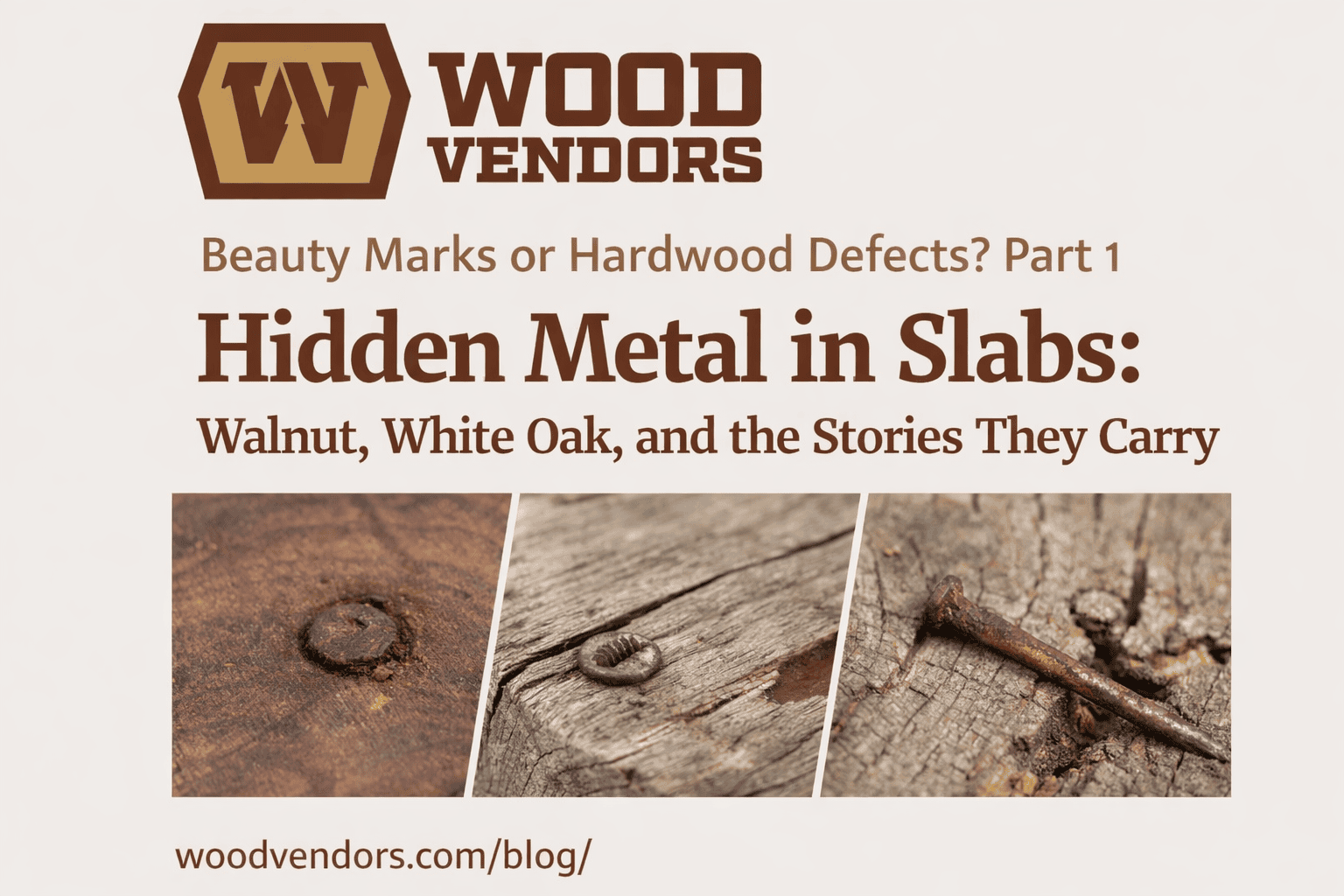
Part 1) Hidden Metal in Slabs: Walnut, White Oak, and the Stories They Carry
Live edge slabs are prized for their natural beauty, but some of the most interesting — and challenging — slabs carry a hidden past. Walnut slabs, white oak slabs, and several other hardwood species are well known for containing metal buried deep inside the wood. Nails, wire, spikes, and other remnants often reveal themselves only when milling begins.
These encounters can lead to burn marks, metal staining, and oxidation, but they also tell a story. Understanding why metal shows up, how it affects different species, and how to work with it can turn a surprise into a design feature.
Why Metal Is So Common in Certain Wood Species
Trees don’t grow in isolation. Many of the most valuable hardwoods spent decades — or centuries — growing around people.
Metal commonly ends up in trees due to:
- Fence lines and pasture boundaries
- Barns, sheds, and old farm structures
- Tree stands, signage, and property markers
- Forgotten nails, wire, and hardware
As the tree grows, it slowly engulfs the metal, sealing it inside the trunk. By the time the log is milled, there’s often no visible sign of what’s hidden beneath the surface.
Walnut Slabs: Beauty with a Reputation
Walnut slabs are some of the most metal-prone slabs mills encounter.
An old wives’ tale about walnut trees
For generations, people believed that driving nails into walnut trees would make them produce more nuts. The idea was that stressing the tree would increase yield. While there’s no scientific proof this works, the practice was common enough that millworkers still see the results today.
That folklore is one reason walnut logs frequently surprise sawyers — and why walnut slab milling is often approached with extra caution.
👉 [Available Walnut slabs for sale]
White Oak Slabs: Even More Likely to Contain Metal
White oak is often considered the most metal-heavy species processed by sawmills.
Why white oak is notorious
- Commonly grows along fence rows and property lines
- Frequently found in agricultural settings
- Extremely long-lived
- Very high tannin content
White oak slabs often reveal:
- Deep black iron stains
- Rust bleed from oxidizing metal
- Burn marks during milling due to density
Once stained or burned, white oak can be more difficult to clean up than many other species — but it’s also what gives white oak slabs their unmistakable character.
👉 [Available White Oak slabs for sale]
Other Species That Commonly Contain Metal
While walnut and white oak lead the list, several other species frequently hide metal:
- Red Oak: Similar tannin reactions, common in farm environments
- Maple: Yard trees often used for hanging signs or swings
- Ash: Fence rows and windbreaks hide wire and staples
- Elm: Old urban and farm trees with forgotten hardware
Any tree that grew near people long enough likely carries some history inside it.
👉 [Red oak, Maple, Ash, Elm slabs.]
Burn Marks: When Metal Meets the Blade
Burn marks occur when a saw blade contacts metal and generates intense heat.
What causes burn marks
- Blade rubbing metal instead of cutting wood
- Dull blades increasing friction
- Dense woods holding heat longer
What they look like
- Dark brown or black streaks
- Parallel lines along the cut
- Discoloration that may go deeper than surface sanding
Even after metal is removed, burn marks can remain because the heat alters the wood fibers.
Metal Staining: A Chemical Reaction, Not Dirt
Metal staining isn’t residue — it’s chemistry.
- Iron reacts with tannins in walnut and oak
- Creates permanent dark discoloration
- Often follows the grain or radiates from metal locations
This is why sanding alone doesn’t always remove metal stains.
👉 [Finished walnut table with stain]
Oxidation: Rust That Keeps Working
When metal remains in a slab, oxidation (rusting) can continue over time.
Effects of oxidation
- Rust bleeding into surrounding wood
- Orange or brown halo stains
- Finish adhesion issues
- Potential weakening around the metal
Moisture accelerates oxidation, making proper drying and sealing critical.
Tips & Tricks for Working with Metal-Affected Slabs
Detecting metal early
- Use magnetic metal detectors
- Look for bumps or distorted grain
- Start with slow, shallow milling passes
Dealing with burn marks
- Aggressive sanding (80–120 grit)
- Light planer passes
- Blend discoloration naturally into the grain
Treating metal stains
- Oxalic acid for iron-tannin reactions
- Wood bleaching when appropriate
- Dark finishes or epoxy accents to incorporate stains
Preventing further oxidation
- Remove exposed metal when possible
- Clean rust residue thoroughly
- Seal slabs promptly after surfacing
Flaw or Feature? That’s Your Call
Some woodworkers try to eliminate every trace of metal interaction. Others embrace it. In live edge tables, countertops, and statement furniture, metal staining and burn marks often become conversation pieces — proof of the tree’s long, working life.
👉 [Slabs for sale with Beauty enhancers!]
Final Thoughts
Walnut slabs, white oak slabs, and many other hardwoods carry more than grain — they carry history. Old farming practices, folklore, and decades of human use are often sealed inside the wood.
At WoodVendors, we believe understanding your material leads to better projects. Knowing why metal is there and how it affects the wood lets you decide whether to remove it, manage it, or celebrate it.
👉 Explore available slabs, see finished projects, and follow along behind the scenes: