At Wood Vendors, everything starts with the material.
Not just how it looks—but how it works, where it comes from, and how it shows up in a finished piece. Because with hardwood, small differences at the board level can turn into big differences in the final result.
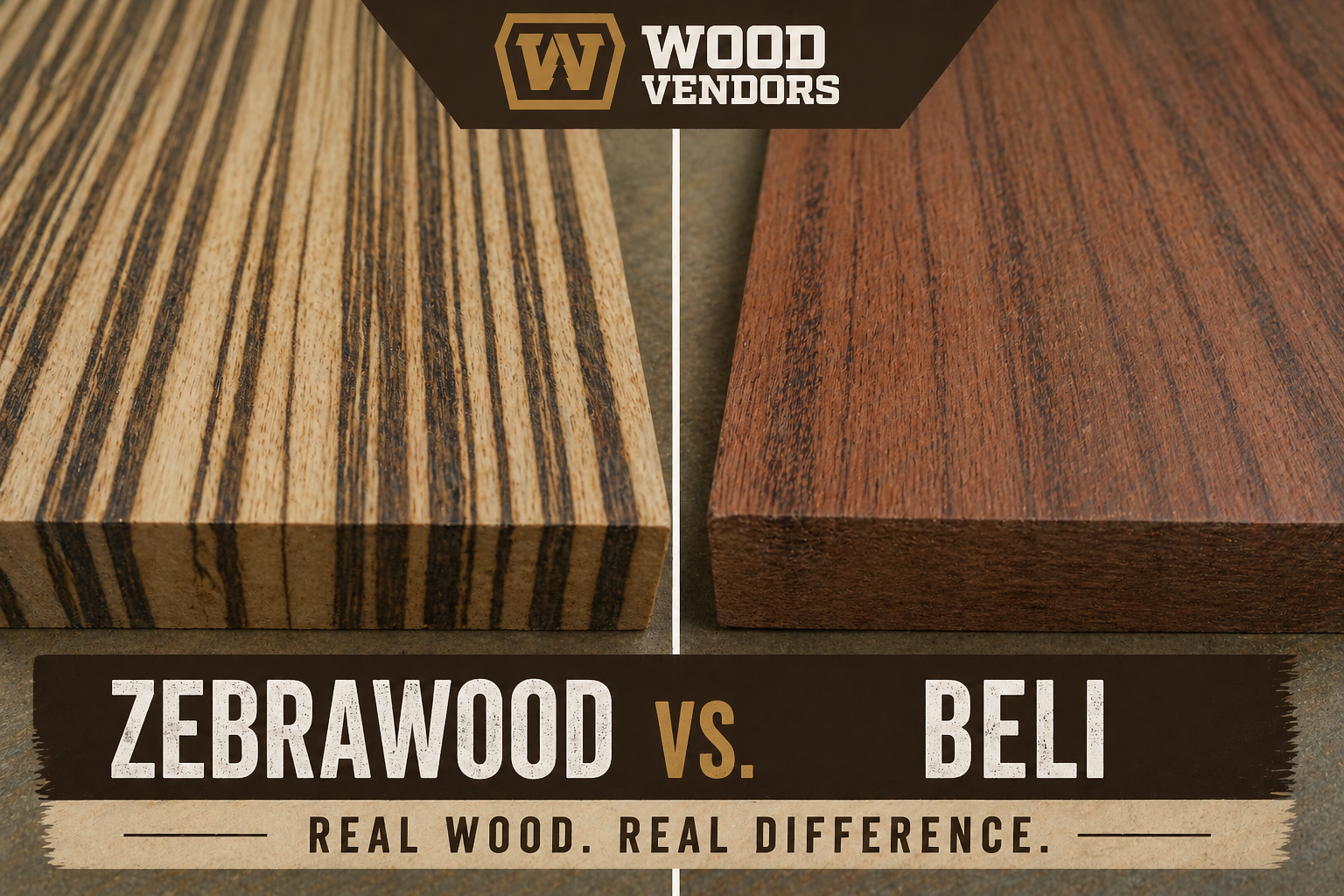
One of the more common mix-ups we see in the market is Beli being sold as Zebrawood.
At a glance, it’s understandable. But once you slow down and look closer—the difference is clear, both visually and structurally.
If you’re buying lumber online, knowing that difference matters.
What Is Zebrawood?
Zebrawood (Microberlinia brazzavillensis) is one of the most recognizable exotic hardwoods available.
It’s defined by contrast.
- Light golden to cream base
- Dark brown to black striping
- Strong, consistent linear pattern
That striping is what gives Zebrawood its name—and it’s not subtle. It’s bold, structured, and meant to stand out.
Zebrawood Specs:
- Origin: West Africa
- Janka Hardness: ~1,830 lbf
- Density: ~50 lbs/ft³
- Grain: Interlocked
- Texture: Coarse
- Workability: Moderate to difficult (tearout is common)
- Common Uses: Furniture, paneling, veneers, statement pieces
Zebrawood is often used when the grain itself is the focal point of the design.
👉 Browse our current selection of Zebrawood lumber
What Is Beli?
Beli (Julbernardia pellegriniana) is also an African hardwood—but it behaves and presents very differently.
Where Zebrawood is about contrast, Beli is about tone and movement.
- Reddish-brown to orange base
- Occasional darker streaks
- More blended, natural grain
Beli Specs:
- Origin: West & Central Africa
- Janka Hardness: ~1,260 lbf (can vary)
- Density: ~42 lbs/ft³
- Grain: Interlocked
- Texture: Medium to coarse
- Workability: Generally easier than Zebrawood
- Common Uses: Furniture, cabinetry, millwork, veneer
Beli can sometimes show striping—but it’s softer, less defined, and far less consistent.
👉 View available Beli lumber
Why Beli Gets Sold as Zebrawood
Most of the confusion comes down to appearance in photos.
In certain cuts, Beli can show:
- Dark streaks
- Linear grain
- Color variation
In low-resolution images—or poorly lit listings—that can be enough to label it as “Zebrawood.”
Sometimes it’s an honest mistake. Sometimes it’s not.
But once it arrives in your shop, the difference is obvious.
Zebrawood vs. Beli: Key Differences
If you’re trying to identify the species, focus on these:
Contrast
- Zebrawood: High contrast, clearly defined stripes
- Beli: Low to moderate contrast, softer transitions
Base Color
- Zebrawood: Pale yellow to cream
- Beli: Reddish to warm brown
Pattern
- Zebrawood: Bold, consistent striping
- Beli: Irregular streaking or blended grain
Weight & Feel
Zebrawood is typically denser and heavier, while Beli feels lighter and machines more easily.
Why the Difference Matters
This isn’t about one species being better than the other.
It’s about using the right material for the job.
- Zebrawood is used when the grain is the design
- Beli is used when you want warmth, consistency, and flexibility
Swapping one for the other—intentionally or not—can affect:
- The final look of your project
- How the wood finishes
- How it machines and assembles
And once it’s built, that decision is locked in.
How to Make Sure You’re Buying the Right Wood
When sourcing hardwood online, a few checks go a long way:
- Look for the scientific name
- Zebrawood = Microberlinia brazzavillensis
- Beli = Julbernardia pellegriniana
- Review multiple board photos, not just one
- Pay attention to contrast—not just “striping”
If the grain looks muted or the color leans red, it’s likely not Zebrawood.
For a deeper look at how we identify and grade lumber, see our guide on hardwood grading and selection
Final Thoughts
Zebrawood and Beli are both solid, usable hardwoods—but they’re not interchangeable.
Zebrawood stands out.
Beli settles in.
The key is knowing the difference before it hits your bench.
At Wood Vendors, we focus on accurate identification from the start—so what you order is exactly what you expect to build with.