For decades, ash has been one of the most trusted and versatile hardwoods in North America. Its strength, flexibility, clean grain, and light color made it a favorite for everything from furniture and flooring to baseball bats, tool handles, and live-edge slabs.
But over the last twenty years, one small invasive insect has dramatically changed the future of ash trees and the lumber industry as a whole: the Emerald Ash Borer.
At Wood Vendors, we’ve seen the effects of the ash borer firsthand. From the increasing rarity of large ash logs to the unique character now found in many ash slabs, this beetle has permanently changed the story of ash lumber.
What Is the Emerald Ash Borer?
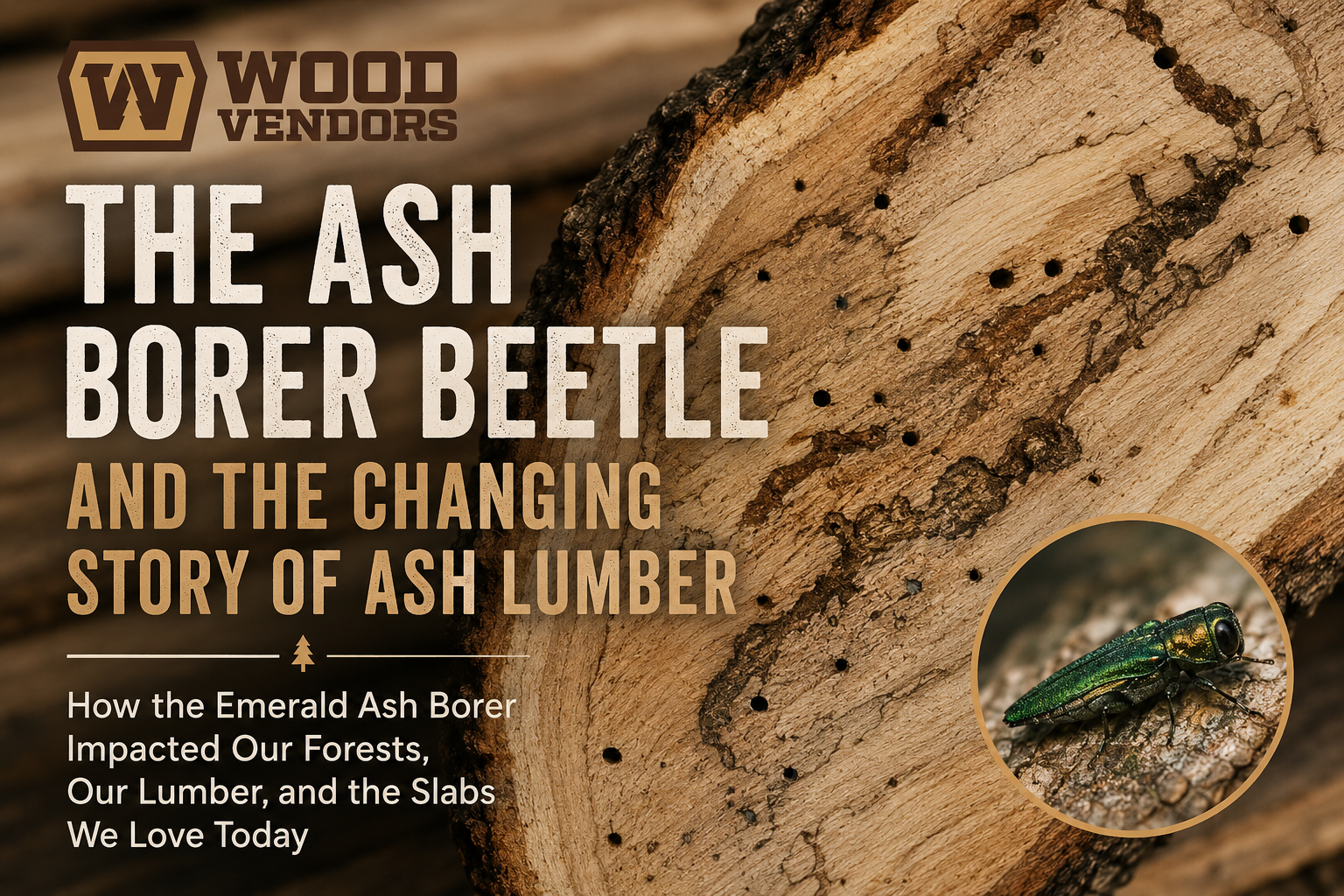
The Emerald Ash Borer (EAB) is a metallic-green beetle native to parts of Asia. It was first discovered in North America near Detroit, Michigan in 2002, although researchers believe it likely arrived years earlier through imported wooden pallets and shipping materials.
Despite its small size — usually only about half an inch long — the Emerald Ash Borer has become one of the most destructive invasive forest pests in modern history.
The real damage comes from the larvae. After adult beetles lay eggs on the bark of ash trees, the larvae hatch and burrow beneath the surface of the tree. They feed on the cambium layer, which is responsible for transporting water and nutrients throughout the tree.
As the larvae create tunnels beneath the bark, the tree slowly loses its ability to survive. Most ash trees die within just a few years of infestation.
Since its discovery, the Emerald Ash Borer has spread across much of the United States and Canada, killing hundreds of millions of ash trees in the process.
Common Signs of Emerald Ash Borer Damage
- D-shaped exit holes in the bark
- Splitting bark or visible tunneling beneath the surface
- Thinning leaves and dead upper branches
- Increased woodpecker activity
- Sprouting near the base of the tree
USDA Emerald Ash Borer Information
How the Ash Borer Changed the Lumber Industry
Before the spread of the Emerald Ash Borer, ash was one of the most common and affordable domestic hardwoods available. It milled beautifully, remained durable in large projects, and offered a clean appearance that many woodworkers loved.
As infestations spread, the ash lumber market changed dramatically.
Increased Salvage Logging
Instead of allowing dead trees to decay in forests and urban areas, many mills began salvaging ash trees before the wood became unusable. This created a temporary increase in available ash lumber as sawmills rushed to recover usable material.
However, timing became extremely important. Once an infested tree sits too long after dying, the wood can begin to crack, stain, soften, or decay.
Declining Long-Term Supply
Although salvaged ash initially flooded parts of the market, the long-term supply of healthy ash trees has declined significantly.
Large mature ash trees — especially slab-quality logs — are becoming increasingly difficult to source. In many regions, entire ash populations have been devastated by the beetle.
As a result, high-quality ash slabs and wide live-edge ash lumber have become far more valuable than they were years ago.
More Character in the Wood
One unexpected result of the ash borer infestation is the natural character now found in many ash slabs.
Beetle activity can leave behind subtle galleries, wormholes, mineral streaking, spalting, and color variation that create truly one-of-a-kind lumber. What was once considered a flaw is now something many woodworkers and furniture makers intentionally look for.
These natural markings tell part of the tree’s story and give slabs an organic appearance that simply cannot be replicated artificially.
At Wood Vendors, we regularly see customers drawn to ash slabs with unique grain movement and beetle character because every slab feels completely different from the next.
Why Ash Is Still One of the Best Woods for Live-Edge Slabs
Even with the decline in ash populations, ash remains one of the best hardwoods available for slab projects.
Ash offers:
- Excellent strength and durability
- Strong, bold grain patterns
- Great stability for large slabs
- Excellent machining and finishing properties
- A lighter natural color that works with many design styles
Its versatility makes it ideal for:
- Dining tables
- Conference tables
- Countertops
- Desks
- Floating shelves
- Benches
- Epoxy river tables
Compared to heavier hardwoods, ash machines exceptionally well while still remaining durable enough for everyday use. It also accepts stain and finish beautifully, making it popular for both modern and rustic furniture designs.
How the Ash Borer Changed the Look of Ash Lumber
The Emerald Ash Borer didn’t just affect forests — it also changed the visual appearance of ash lumber itself.
As larvae tunnel beneath the bark, they create natural patterns and textures that can become visible once the log is milled into slabs. Combined with mineral staining and natural color variation, these markings give modern ash slabs far more visual character than traditional clean ash lumber from decades ago.
Many furniture makers now intentionally preserve these features during the milling and finishing process.
Small beetle holes, rustic grain movement, and natural imperfections are often highlighted rather than removed. Some slabs feature subtle markings, while others display dramatic texture and figure that become the centerpiece of a finished table.
At Wood Vendors, we currently have several ash slabs that showcase this incredible combination of beauty, history, and natural character. No two slabs are alike, and every piece carries its own story.
A Rare Opportunity: A Beautiful Ash Log Coming Soon
Because of the widespread destruction caused by the Emerald Ash Borer, large healthy ash logs have become increasingly rare throughout North America.
That’s why we’re especially excited about a beautiful ash log currently in our kiln that will be ready next month.
This log has the potential to produce some incredible wide live-edge slabs with the clean grain, strength, and color that originally made ash so popular — while still carrying the unique natural character that modern ash lumber has become known for.
Once the slabs come out of the kiln, they’ll be surfaced and prepared for future custom projects. We’re looking forward to seeing the grain, figure, and personality fully reveal themselves during the finishing process.
Opportunities to mill high-quality ash logs like this are becoming harder to find every year, making these slabs especially unique.
We’ll be sharing photos and updates once the slabs are finished, so keep an eye on our blog and social channels.
Follow Wood Vendors on Instagram
The Future of Ash Lumber
The Emerald Ash Borer permanently changed North American forests and reshaped the ash lumber industry forever.
What was once considered a common domestic hardwood has become far more rare, valuable, and visually unique.
Today, ash slabs represent more than just beautiful wood — they represent preservation, craftsmanship, and the story of a species impacted by one of the most destructive invasive insects in modern forestry history.
At Wood Vendors, we’re proud to continue sourcing, milling, and preserving these remarkable slabs while they’re still available.