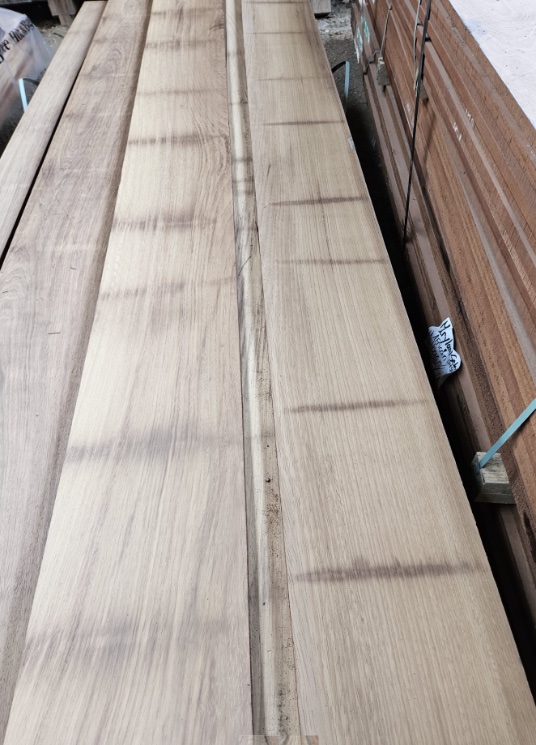
We’ve been seeing a lot of Iroko come into the U.S. lately with heavy dark lines across the face of the boards. The first thing everybody says is: “sticker stain.”
But after looking at enough of it, that’s not really what this is.
What we’re seeing is closer to a chemical burn caused by the stickers used during drying and packaging — and there has been a LOT of it hitting the market recently. Entire containers have shown up looking clean on the outside until they’re surfaced, only to reveal deep dark striping that doesn’t plane out.
Some of this material is already being rejected and shipped back overseas.
And honestly, it’s becoming a serious problem.
Why This Matters
Iroko is not cheap lumber.
People buy it for high-end millwork, exterior projects, yacht work, doors, furniture, architectural applications — jobs where appearance matters. If the material comes in with deep chemical discoloration throughout the pack, it can turn a good-looking container into downgrade material fast.
The frustrating part is that a lot of buyers assume the sawmill just dried it poorly.
That’s not always the case.
Traditional Sticker Stain vs. What We’re Seeing
Real sticker stain has been around forever. It usually happens when lumber stays wet too long during drying. Moisture, heat, lack of airflow — all of that can create shadowing where the stickers touch the board.
Wood drying experts have talked about this for years:
- Woodweb — Causes and Cures for Stains in Dried Lumber
https://www.woodweb.com/knowledge_base/Causes_and_Cures_for_Stains_In_Dried_Lumber.html - Kiln Direct — Lumber Drying Defect Causes
https://www.kiln-direct.com/content/lumber_drying_defect_causes/index.html
But the Iroko we’re seeing now is different.
This stuff is darker. Deeper. More aggressive. And in many cases it doesn’t fully machine out.
That’s why we believe much of it is actually a chemical reaction from the sticker material itself.
Why Iroko Reacts So Badly
Iroko is loaded with natural oils, tannins, and extractives. That’s part of what makes it such a durable hardwood outdoors.
But those same properties can also make it reactive during drying.
If the stickers are wet, contaminated, chemically treated, mixed species, or reused improperly, they can react with the wood under heat and pressure during kiln drying or container storage.
Once that reaction starts, you get dark striping that behaves more like a burn than a surface stain.
Research on hardwood discoloration during drying backs this up:
- ResearchGate — Discolouration of Wood During Drying
https://www.researchgate.net/publication/282909674_Discolouration_of_wood_during_drying - USDA Forest Products Laboratory — Drying Hardwood Lumber
https://www.fpl.fs.usda.gov/documnts/fplgtr/fplgtr118.pdf
What We’re Seeing in the Market
This isn’t one bad bundle.
We’ve now seen multiple shipments from different sources come into the U.S. with the same issue. Some packs look acceptable rough sawn, but once surfaced the sticker lines become obvious.
Typical signs include:
- Black or dark brown striping
- Deep marks that don’t plane out
- Discoloration matching sticker placement
- Uneven color throughout the pack
- Surface oxidation around sticker contact points
And once customers start machining the lumber, the claims begin.
Prevention Starts Long Before the Container
By the time the material hits the dock in the U.S., it’s already too late.
Prevention has to happen at the mill:
- Clean kiln-dried stickers
- Proper airflow
- Controlled drying temperatures
- Dry sticker stock
- Compatible sticker species
- No contaminated or chemically treated spacer material
Sounds simple, but when production ramps up and mills are pushing volume, corners sometimes get cut.
The hardwood industry has always dealt with drying defects. But with tropical hardwoods like Iroko, small mistakes can create expensive problems very quickly.
Our Take
Iroko is a relatively expensive high-end exotic hardwood that customer’s expect to not only function well, but to also look great.
If you’re manufacturing doors, cabinetry, furniture, yacht interiors, millwork, or architectural products, deep chemical sticker burn can make the material unusable for the application it was purchased for.
At Wood Vendors, we inspect incoming material aggressively because problems like this don’t show up in a spec sheet. They show up when the wood hits the planer.
And right now, there’s a lot of Iroko in the market that buyers need to look at very carefully before committing to large volumes.